What makes art, art?
It was never the tools. It's the human behind them: the intention, the vision, the life that shaped it. And yet here we are, in this strange moment, naming the work after the technology that touched it. AI artist. You hear it everywhere now, and nobody seems to question it. Festival programmes, press releases, LinkedIn posts. As if the tool were the author. As if the camera made the film, the piano wrote the nocturne.
Please stop saying AI artist. They are artists who use AI. That's the whole argument. One sentence. But it needs unpacking, because I think the label means something, and the confusion it creates is feeding real polarisation.
We don't say "electricity musician." Nobody is a "Final Cut Pro director" or a "Pro Tools sound designer." The tool is assumed. The person is the story. So why are we doing it with AI?
The polarisation
I recently visited the Glasgow School of Art graduate fair, and something struck me about the work. A lot of it was deliberately lo-fi. Nostalgia, old video recordings, analogue textures, work that seemed to be consciously pushing against the AI aesthetic. The younger generation pushing back, and not subtly.
I understand the impulse. But I think what's happening is that technology in general is getting wrapped up in the pushback, and the whole thing has become polarised. You see it across society now. On one side, a reflexive rejection of anything that smells of AI. On the other, the evangelists: people making endless stuff where the technology is the entire point, where the tools and the AI are the story, and what they're actually trying to say as artists takes a back seat. The work with the loudest voice is often the most uninteresting. There's nothing behind it other than shouting about itself.
Both poles are simplistic. The truth is more subtle, and it's also very old. It's not the tools, it's what you do with them. That was the mantra in every studio I ever worked in and it's as old as the hills. There have always been shiny boxes, always the promise that the next bit of kit will make the music better. It never does. In every era, the same rule: the gear doesn't make the work. The person does.
The work that resonates
The work that lands, AI-assisted or not, lands for the same reasons it always has.
Story. Craft. Authenticity. Lived specificity: the particular strangeness that only comes from a real human life, with its obsessions and griefs and accidents. Depth of vision: someone who has something to say and knows how to say it. And the rendering: how it's made, what choices were made, what was sacrificed to make them.
AI supplies none of these. It can execute them, if they're already present. It cannot generate them from nothing.
The "AI artist" doing interesting work isn't interesting because of the AI. They're interesting because they're an artist. AI is how they rendered the vision. It is not where the vision came from.
Scorsese, of all people
Watch what happens when an established artist admits to using AI. Last week it was Martin Scorsese, announcing he's advising an AI image company and using its tools to storyboard his next film. The reaction was immediate: shock, dismay, a guild statement, people declaring themselves sickened. One of the preeminent filmmakers of his generation, a living embodiment of cinema as human craft, and the news created a kind of cognitive dissonance. How can that be?
But I think the reaction misses the point, and the case actually illustrates it. Scorsese has spent seventy years trying to get the images in his head in front of his collaborators. For him this is a faster pencil, a tool sitting in pre-production, well below the level of the creative decisions. Nobody watching his next film will be watching AI. They'll be watching Scorsese. The vision is his. It always was.
These are tools. They enable us to do things we couldn't do before. The involvement of AI does not, on its own, tell you anything about the quality of the work. Which cuts both ways: the same week, Amazon announced a slate of fully AI-generated kids' animation. They are what they are. But a lot of kids' animation was generic long before AI arrived. The McDonald's of content: shiny, optimised for eyeballs, nothing beneath the surface. That economy existed for decades. AI just made it cheaper to run.
The question was never 'is the tool AI?' The question was always 'is there a vision behind it?'
The generous case
This is not an anti-AI argument, and I want to make the generous case properly, because it's genuinely exciting.
AI is enabling makers who lacked resources to realise ideas they could never have made. Filmmakers, artists, composers, sound designers, anyone whose vision outran their access. Someone with a story, with years of thinking about their subject, who never had a crew, a budget, a studio, can now explore that vision on a laptop at near-zero cost.
That is historically how new tools work. The printing press didn't create great writers; it let great writers reach the world. Digital cameras didn't create great cinematographers; they let people who couldn't afford film stock learn, make, fail, and make again.
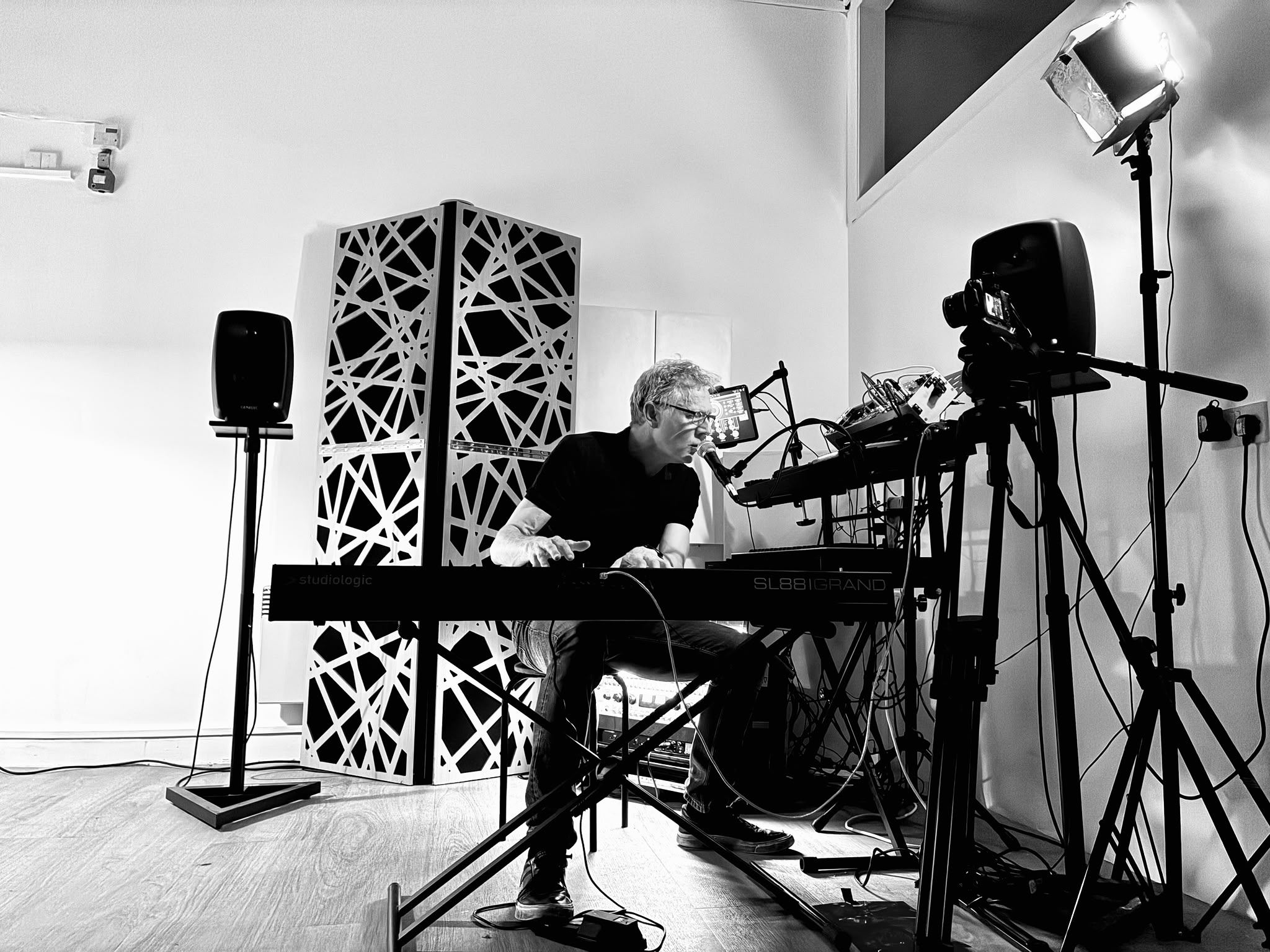
I'm a composer. Thirty years of writing music and designing sound for other people's pictures: film, television, animation, games. The grammar of image and sound is something I've lived inside my whole working life, always as a collaborator, one part of someone else's whole. Now I'm dipping my toe into transmedia work as an extension of my music, using the same creative flow that drives everything else I make. Not because AI made me a filmmaker. Decades of craft shaped the vision, and the tools are helping to unlock it. This work used to sit on the far side of a learning curve I was never going to traverse.
Some of the most interesting artists of the next decade will have been enabled by AI. They will not be called "AI artists" in ten years. They'll just be artists.
Where I stand
For clarity, my own position, because I think everyone working with this stuff owes an account of it.
I've played with generative AI music. I'll admit it: initially I was gobsmacked. But rapidly the music coming out was simply so boring. Familiar in a sickly sweet kind of way. It actually made me queasy. The same feeling I get at my local out-of-town shopping arena, with the same identical shops as every other out-of-town shopping centre. Culturally barren. An artifice created to extract money. Generative AI music fits the McDonald's analogy perfectly. And it clarified something for me: production values no longer define quality. Human authenticity does. The depth behind the work.
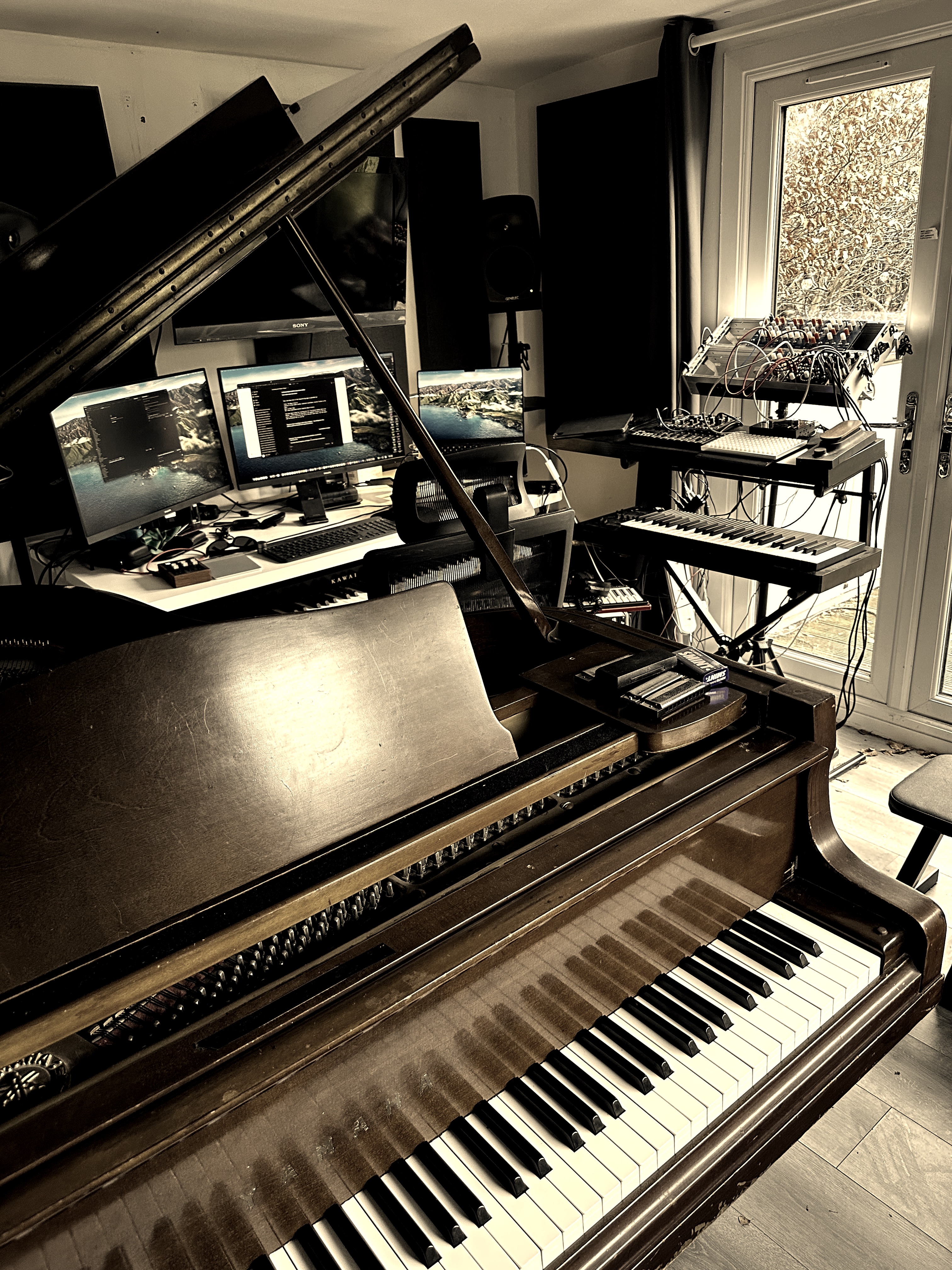
Maybe as a reaction to all that polish, my current work is falling back in love with hardware. I went through a modular synth phase about ten years ago, but the friction was high and the racks started to gather dust. Working in the box was too compelling, too immediate, too convenient, particularly for commission work. But I've rediscovered it, and this time it's different.
I've coined a term for it: Unstable Systems. It's almost a philosophical approach to music. The wrangle between human and machine, that liminal space where the human expression is encoded in the process of shaping what comes out. It comes from decades of playing and improvising, which has always been at the heart of my process. The piano was the latest music technology of its time, and I'd sit for hours just exploring the resonance and interaction of hammers and strings, my fingers triggering levers and pedals, until you find a way to express yourself musically.
I have the same relationship with my current system: modular synths, patch cables, control voltages, computers, expressive surfaces, laptop plugins, iPad pianos, and a multidimensional expressive synth called the Osmose that responds to the most subtle touch and feels like the future of music making. The system has clocking and generative processes, loopers, granular processing, spectral resonance. It's alive. It can have a life of its own: a hybrid generative music machine and a highly expressive instrument at the same time. I'm never fully in control, which is what makes it thrilling and challenging, always on the edge, which is where the interesting music happens.
And part of Unstable Systems, honestly, is the part of me that doesn't want any more boxes. I have what I have. The job now is to master it, to become fluent with it. Though maybe not too fluent. A slight naivety with the instrument is interesting, because it lets you express yourself very cleanly as a human. It reveals your truth, because you're responding intuitively while you wrestle with the thing. The well-worn muscle memory that pushes you into the safety zones never gets a chance to take over.
That, precisely, is what generative AI doesn't have. It does the wrestling for you. There's no intuitive response encoded in the result, no truth revealed in the struggle. Unless, and this is the whole distinction, you use it as something that enables you as an artist rather than something that makes the work for you.
The challenge
A filmmaker put it to the room plainly, and it's the sharpest image I've heard in this whole debate: fine, make your AI film. But could you make a film with a camera, with actors, on a set? Could you do that?
Not gatekeeping. A diagnostic. Because if the answer is no, if AI isn't one tool inside a larger practice but the only route to any output at all, then something is missing. Not morally. Practically. The depth of vision that makes work resonate comes from somewhere. It comes from years of making, watching, failing, refining, caring about the craft. You cannot shortcut that accumulation with a prompt.
The old rules still apply. They have always applied. They will apply to whatever tool arrives after this one.
If there's no story, there's no film. If there's no vision, there's no art. If there's no human depth behind it, there's nothing to resonate with.
In a room
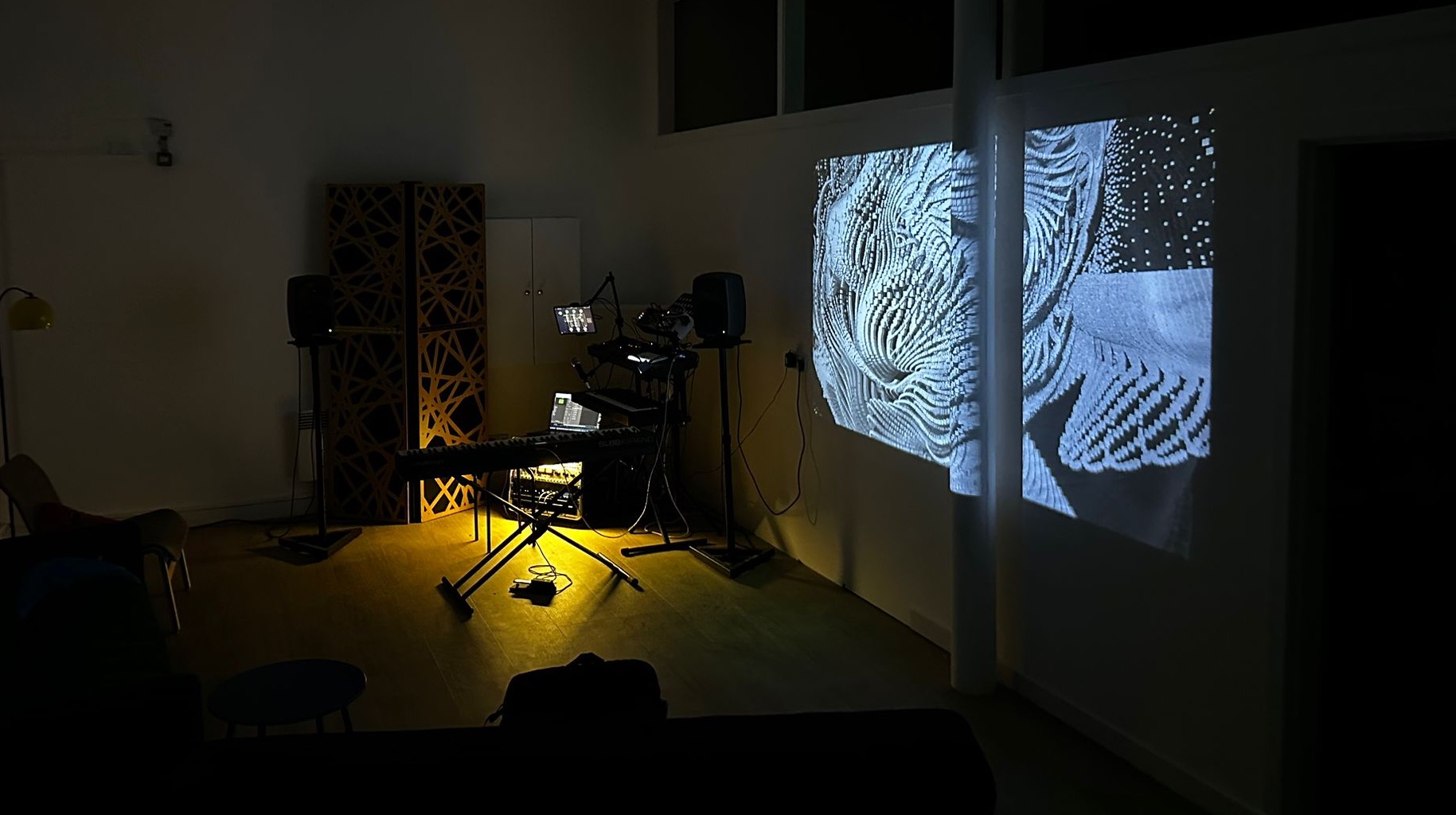
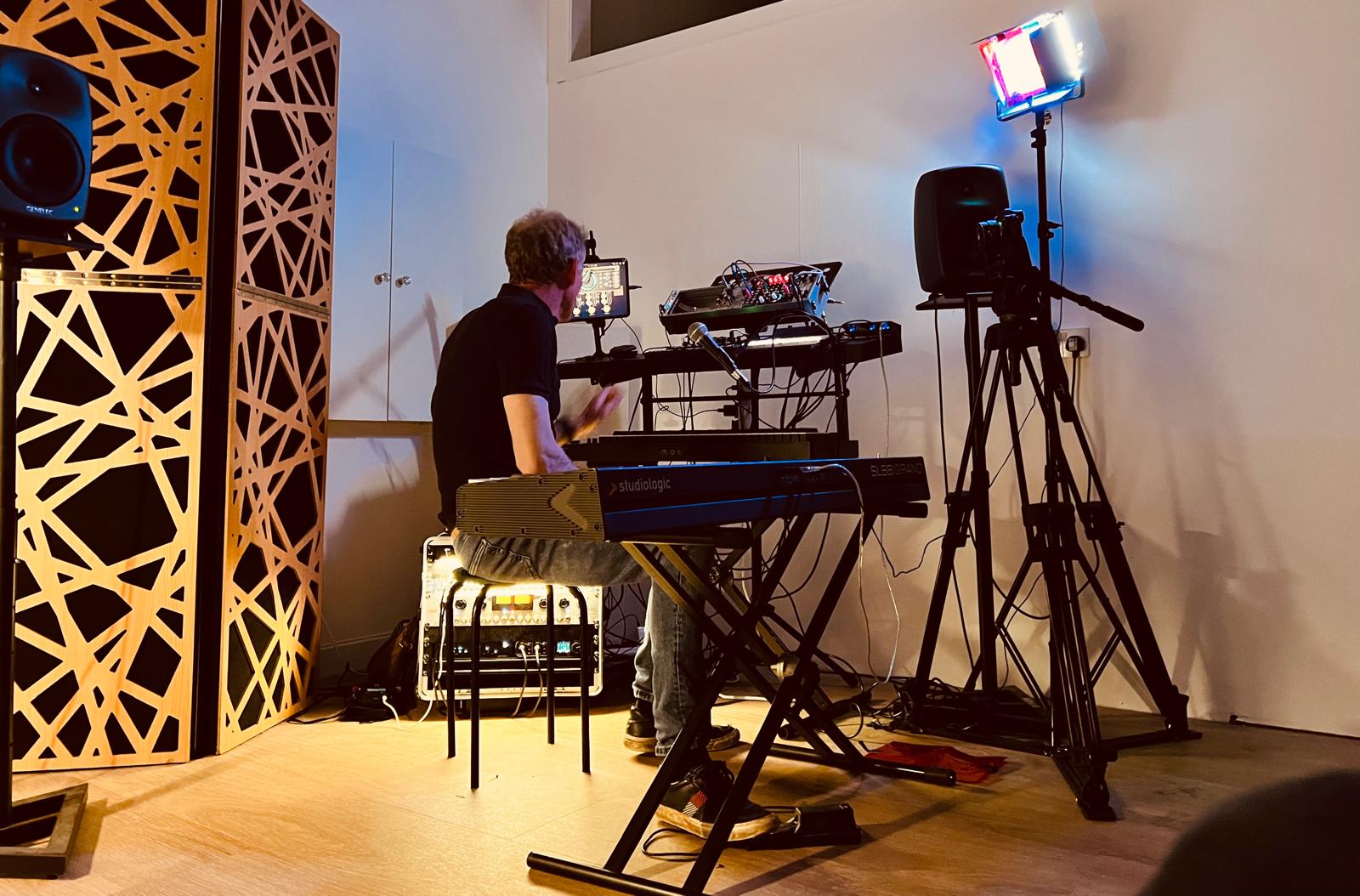
On Monday night I did a forty-minute session with a small audience in an intimate studio setting with good acoustics, and everyone opened their minds. It was a powerful experience.
And here is the part where the label falls apart. I'd built visual systems in TouchDesigner, and AI helped me set things up, build patches, run transfer models that transform my voice, and generally provided the infrastructure intelligence underneath it all. But the music was real. It was human. Electricity, systems, flowing patches, cables, performance, voice.
I think this is the point where people react when you say "I'm using AI." But used this way, AI is a massive enabler for creativity and artistic expansion. It sits below the level of the creative decisions, not in place of them. That's not a purity argument. This isn't about purity or polish. It's about musicality and intention, which happen to be uniquely human, and which gain purpose through a shared experience.
I've always felt the audience become part of the music making. I wouldn't have done what I did on Monday without them there, responding, attending, joining me on a very internal journey. It's powerful and it completes the process. It's why music exists. To communicate, to connect, to commune. To tell stories, however abstract. It's at the heart of my philosophy, and it can only happen in the moment.
The tool is not the author. The artist is.
Please stop saying AI artist.