After school
When I was a kid, most people came back from school and played football. I was the geek who came back from school and played the piano for an hour and a half.
I wasn't reading anything. I wasn't learning pieces. I was just experimenting. Pressing things, seeing what happened, following whatever came back. It sucked me in completely, and it never let go.
That's how I learned music. Not from the page, from the moment. Do something, and it doesn't matter what, and then everything hooks around that.
The best part, hidden
Thirty years later, that's still how everything I make starts. Orchestral scores, soundtracks, spatial soundscapes for museums, pop, jazz, whatever the job needed. Every one of them began with me sat at something, not knowing what was about to happen.
And then I'd take that moment and turn it into a finished thing. Written, recorded, cleaned up, delivered.
I love hearing my music back. There's a real pleasure in it, that quiet "oh, that works." But if I'm honest, the finished thing is the less interesting end. The moment it occurs, that's the fascinating bit. And for thirty years nobody has been in the room for it. That's been the frustration underneath a lot of my work. I can do almost anything with music except share the part that matters most.
Jumping off
That moment is a risk. You don't know what's coming. You press something and there you are.
When I play live like this, the audience is jumping off the cliff with me. They're not watching someone deliver a thing that already exists. They're there while it's found. And I think that's exactly what gives a performance its buzz. Not the polish, the risk.
It's also exactly what we're losing. Everything costs more. The ticket, the travel, the babysitter. How music gets promoted has been taken over by ticket companies and platforms whose job is to make money, not to introduce you to something you didn't know you wanted. So people spend on what they already know, promoters book what already sells, and the thing you have to be there for gets quietly squeezed out.
The strange part is that there's never been so much good music. We're in a niche of a niche of a niche, and it's genuinely an explosive period. More people can make music than ever, and that's a good thing. It's just harder and harder to get to it in a way that means anything.
Real, not good
I'm wary of the word good. I can't judge what's good, and neither can you, really. There's no measurable outcome from music. It's a feeling, an experience, and that's the whole point of it.
So I don't think about good. I think about real. Did this come from the right place? Is someone actually experiencing something and sharing that with me, or are they copying, chasing a trend, hitting a spec? Real versus not real. That's a distinction I can work with.
And it's about intention. Which is where AI comes in, briefly, because I use it every day and I'm not going to pretend otherwise. It can make very slick things. But it has no intention of its own. If nobody asked it anything it would just sit there. Whatever intention there is comes through a person. It always did.
The ground
Here's how I make sense of the risk. Everything's jazz for me.
In jazz, the band is solid and there's a tune. Then the solo goes off on a mad journey, and on its own that journey would be alienating. But you're rooted. You know where home is. So you go with it. Prog rock is the same thing with more books on the shelf. Indian ragas are the same. Folk music is the same.
Pibroch has a word for it. The ùrlar is the ground, the theme everything sets out from and returns to. And I've come to think the ground is the people. It's where we all sit. If everyone's sat on the ground, we can do whatever we want, because nobody's floating in midair not knowing which way is up.
The Grateful Dead understood this. People get them wrong as the band that improvised. They were a band with songs, and the songs were about feeling more than structure. They just did what they did, unapologetically, and let things roll. People came back night after night, some nights didn't land and everybody knew that was the deal, and they let the audience tape the shows and pass them round. Which is a community, built decades before social media borrowed the idea and turned it into a dopamine payola machine.
The Dead had the ground. So the nights could go anywhere.
Two ways in
I've got two ways of doing this now.
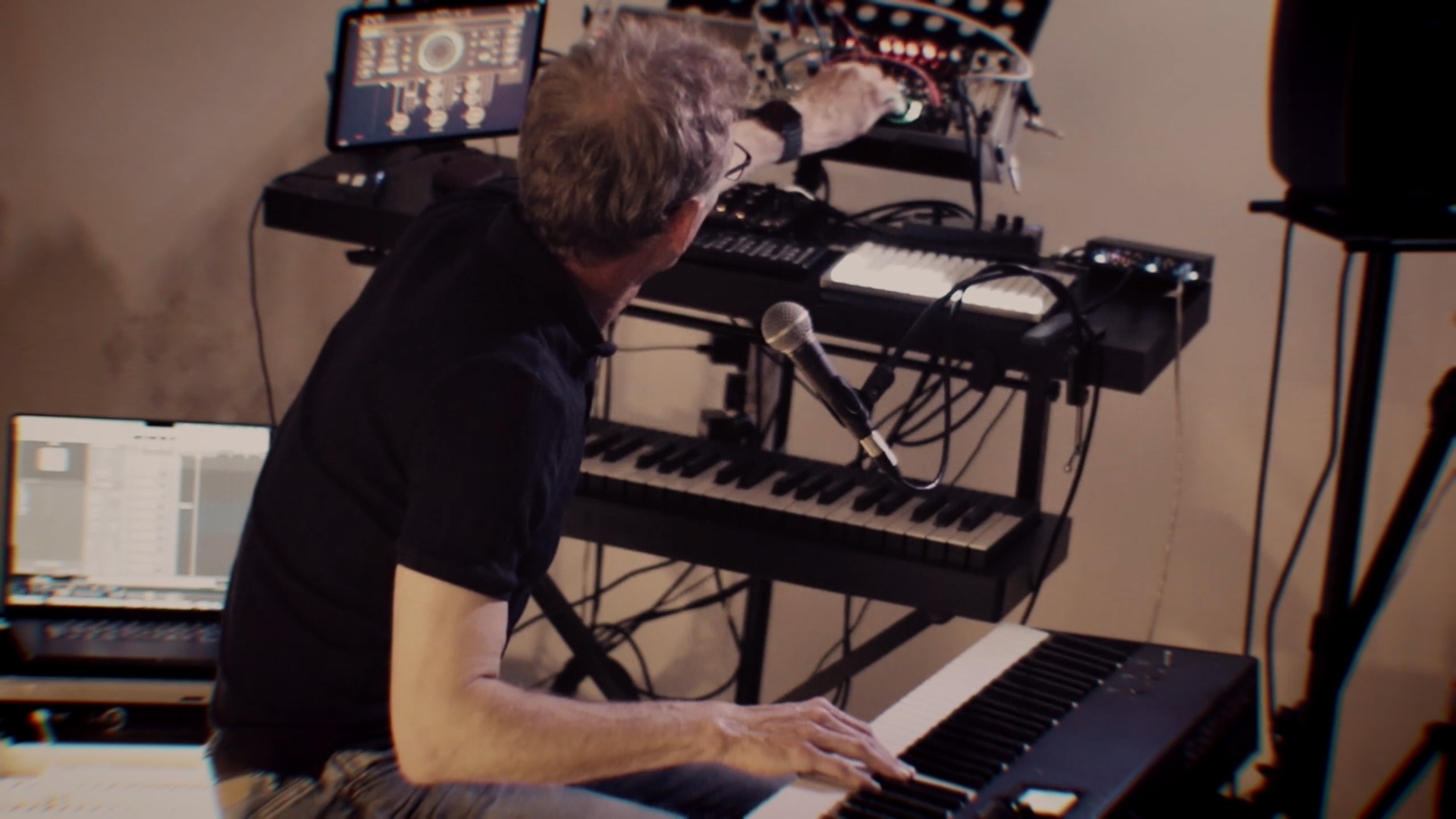
Unstable Systems is the Dead end of it. A rig of synths, cables, voltages and an instrument called the Osmose that responds to the slightest touch. Nothing fixed. I turn up and see what the system and the room give me.
Ùrlar is the tune. The ground is set, the arc is shaped, and what grows out of it happens on the night. Same principle, more composed.
I try not to play too much between them. If I overplay, muscle memory takes over and I end up in safe patterns. A few days away, then sitting down at the real piano, hearing how those notes resonate, that's when the freshness comes. I keep my powder dry. Then I jump.
So
On Friday 4 December I'm premiering Ùrlar at House of Toad in Park Circus, Glasgow. About an hour of music and projected light. I'm nervous, which I'm taking as a good sign.
You can find out more at gileslamb.com/urlar.
I don't know how it'll go. That's rather the point.
Giles